 Cape Dreams News from in and around the Cape
HERMAN GIBBS
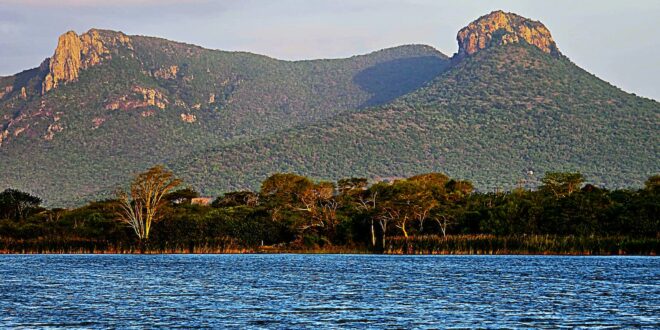
25 October, 2025 – Nestled in the heart of KwaZulu-Natal, where lush hills cradle deep histories and age-old tales, stands Ghost Mountain—a monolithic marvel steeped in legend.
To the local Zulu community, it is a revered resting place (Mkuze, Northern KwaZulu-Natal, to be exact) for ancestral spirits, embodying a profound connection of history, endurance, and spirituality.
Rider Haggard, a celebrated English author, beautifully portrayed Ghost Mountain as “a great and strange mountain,” further underscoring its mystique by suggesting it’s haunted. He described the summit as having a grey peak that resembles the head of an older adult. Such vivid imagery highlights the cultural and spiritual reverence this mountain evokes among many.
The historical backdrop of Ghost Mountain dates back to the Ndwandwe tribe, under the rule of the Gaza family. They flourished at the foothills of this grand peak until their tragic fall in 1819, when they faced the formidable Zulu king, Shaka.
After their defeat, Soshongane, the patriarch of the Gaza family, sought refuge in Mozambique, where he went on to establish the Shangaan tribe. Despite this physical separation, the bond to Ghost Mountain remained unbroken.
Tradition has dictated, for generations, that the Ndwandwe lineage returns to Ghost Mountain to conduct the final rites for their chiefs. Nestled high within its steep slopes is a sacred cave, once utilised as a tomb by the Gaza family. The last earthly voyage for Soshongane and his heirs required them to undertake a challenging journey back to the mountainside, even after having settled far away.
Under the cover of darkness, their mummified bodies, adorned in black bull skins, were stealthily transported, eluding the gaze of Zulu warriors.
This intricate interplay of funerary customs illuminates the profound connections binding the land and its people—a bond forged through tradition and unwavering resilience.
The region’s historical landscape morphed further during the Anglo-Zulu War in 1879, a fierce conflict that reshaped Zululand’s dynamics. The war ignited a tumultuous era, characterised by intense rivalries and battlefield ferocity, particularly between Prince Dinuzulu, the son of the ousted king Cetshwayo, and Zibhebhu, the leader of the influential Mandlakazi faction of the Zulu nation.
Even today, Ghost Mountain represents more than just a geographical landmark; it stands as a powerful emblem of cultural legacy, a sanctuary of ancestral spirits, and a testament to the tenacity of a community that has endured countless trials across the centuries.
Each ascent to its slopes is a reverent journey into the past, evoking a deep sense of respect and wonder.
Disclosure: Herman Gibbs is staying at the award-winning Ghost Mountain Hotel as a guest of the KwaZulu-Natal (KZN) Tourism and Film Authority. The Ghost Mountain Hotel is adjacent to the Ghost Mountain and the Lebombo Mountain Range. The information may be accurate or not entirely, as history has not always been recorded accurately.

